
National Police Clearance Online Appointment Philippines 2026
The National Police Clearance Online Appointment in the Philippines (2026) lets applicants schedule, pay, and process their clearance digitally, making the system faster and more organized. It helps reduce long queues by allowing users to choose their preferred date, time, and police station online.
Getting a police clearance isn’t difficult because of the background check—it’s the online process that trips most people up.
Picture this: you wake up early, get dressed, and head to the police station, only to be turned away because your appointment didn’t go through. Or maybe you already paid through GCash, but the site crashed before you could download your receipt. Frustrating, right?
If you’re here, you’re probably applying for a job, processing Civil Service requirements, or securing documents for a firearm license. In the past, getting a police clearance online registration—commonly called a pulis clearance—meant long lines and manual paperwork at your local municipal office.
That’s no longer the case.
Today, the Philippine National Police uses the National Police Clearance System (NPCS), a fully digital and biometric-based platform. Your clearance is now centralized and recognized nationwide—but there’s a catch: walk-ins are no longer allowed. Without a confirmed online appointment, your application won’t be processed.
This guide will walk you through everything you need to know—from registering online and fixing payment issues to understanding what a “Hit” status means—so you can complete your police clearance online smoothly and without stress.
How To Get PNP Clearance?
To obtain your clearance certificate, start by creating an account on the PNP’s secure online portal. Then, schedule your appointment and pay the necessary fees. On the day of your appointment, visit the designated police station. Before applying know about Police Clearance Requirements Philippines.
Below, you’ll find a step-by-step guide with easy-to-follow screenshots to help you complete your application smoothly.
Phase 1: NPC Online Registration
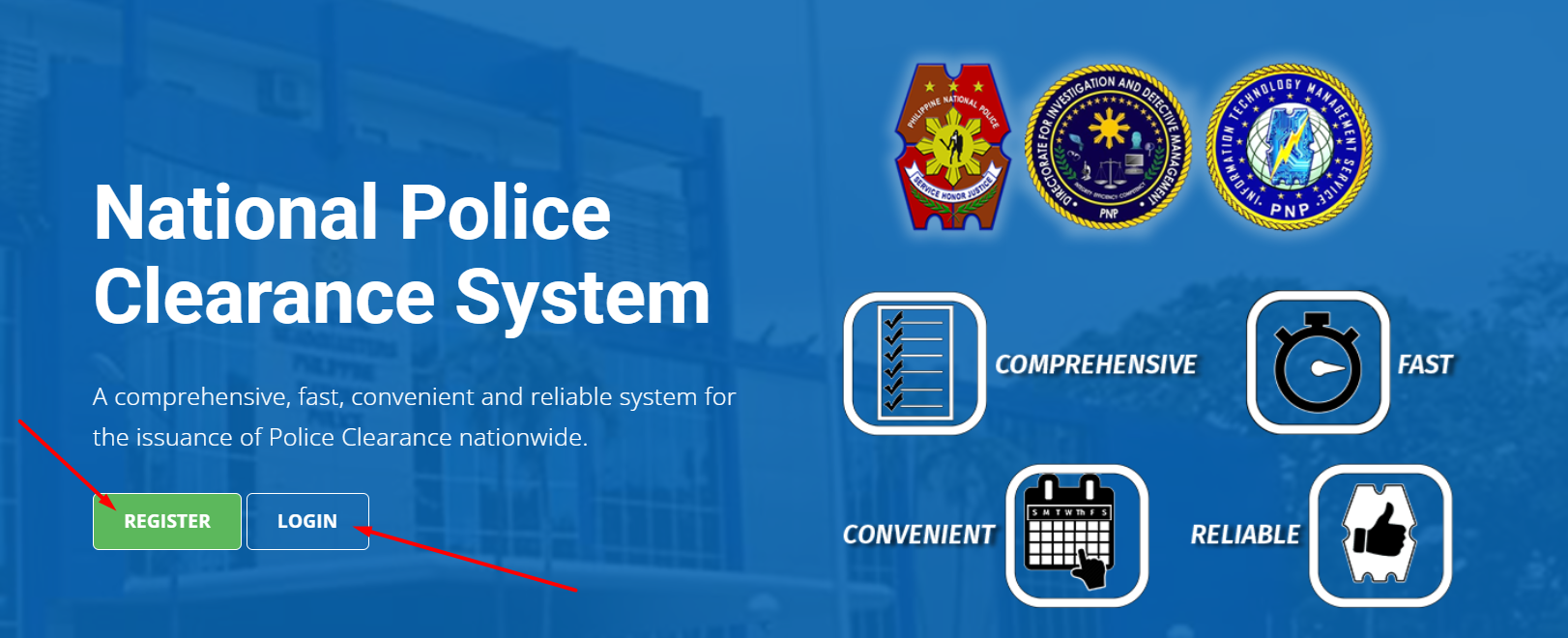
Go to the Official Portal: Visit https://pnpclearance.ph (search for “pnpclearance.ph register” if needed).
Verify Safety: Make sure the URL ends with .ph to avoid fake websites that can steal your information.
Start Registration: Click the “Register” button to create your account.
Language Settings: You can ignore any language pop-ups (usually English or Taglish).
Agree to Terms: Tick all boxes for the Terms & Conditions.
Fill in Your Details: Enter your full legal name, email, mobile number, and select your gender.
Submit Your Form: Confirm all information and submit.
Activate Your Account: Check your email (including Spam) for a message from NPCS and click the link to activate your account.

Phase 2: Completing Your Profile
You won’t be able to book a police clearance appointment until your profile information is fully completed.
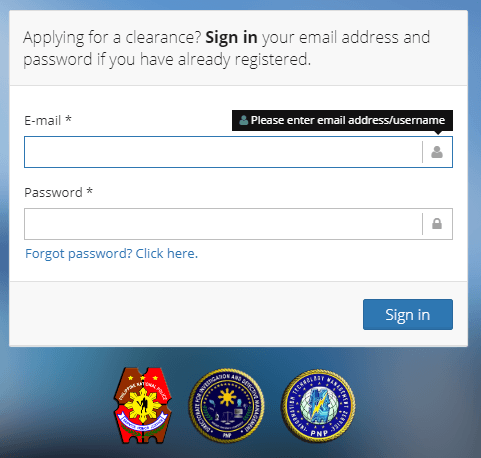
Log In: Access your account using your registered email and password at pnpclearance.ph (search for “pnpclearance.ph register login” if needed).
Edit Your Profile: Click “Edit Profile” to update your information.
Fill in Required Details:
- Personal Information: Height, weight, blood type, and any distinguishing marks.
- Family Information: Names of parents and spouse. Make sure to include your mother’s maiden name—it’s important for verification.
Upload Your Photo:
- Common Mistake: Many applicants get rejected at this step.
- Correct Way: Use a 2×2 photo with a white background. No glasses, hats, or accessories. If you don’t have a formal scan, a clear, well-lit selfie against a plain white wall works—just crop it into a square.
Save Your Profile: Make sure all entries are complete before saving to proceed with booking your appointment.
Phase 3: Booking the Online Appointment Police Clearance
Start Application: Click “Clearance Application” on your dashboard.
Choose a Station: You can book at any police station. If your preferred station is full, try a nearby one.
💡 Tip: Some stations update cancellations daily, so checking early in the morning can snag an open slot.
Pick a Date: Select your appointment. Morning slots (8–10 AM) are usually more reliable.
Select Type: Choose “National Police Clearance.”
Go to Payment: Click “Next” to pay the fee and confirm your appointment.
Here is more important content about: How to Get a PNP-HPG Clearance
Tutorial to apply for National Police Clearance Online
Video Guide: How to Apply for National Police Clearance Online in the Philippines
Disclaimer: This youtube guide video is provided for informational purposes only. We do not claim ownership of the video or its content.
Why the System Shifted (And Why It Matters)
Before using the new system, it helps to know why the old Local Police Clearance (LPC) was phased out in the first place.
The Old System (LPC):
- Restricted use: It was only valid in the area where it was issued.
- No shared database: A person with a record in one city could still appear “clear” in another because systems weren’t connected.
- Different formats: Each municipality followed its own style, leading to inconsistent documents.
The Current System (NPC):
- Nationwide coverage: It checks your records against a centralized PNP database, making the clearance valid across the country.
- Enhanced security: Each clearance comes with a QR code that allows quick and easy verification of its authenticity.
- Biometric integration: Your photo, fingerprints, and digital signature are securely stored in the national system for future use.
Why the rush in 2026?
With stricter enforcement of the Data Privacy Act and the introduction of the National ID (PhilSys), institutions have become more rigorous in their requirements. Employers and banks now rarely accept outdated local clearances. Instead, they require a National Police Clearance, as it verifies that you have no criminal record across the entire Philippines—not just within your barangay.
What is the Police Clearance System?
The PNP Clearance is an official service provided by the Philippine National Police that issues a certificate confirming whether a person has any criminal record or pending cases in the country. This document is commonly required for job applications, visa processing, business permits, and other legal transactions.
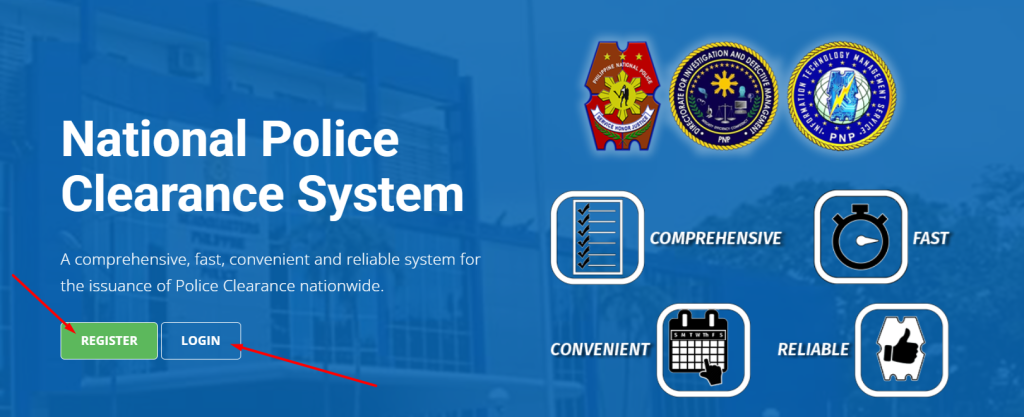
To get a clearance, applicants need to create an account, set an appointment, and pay the required fee through the PNP’s online system. On the scheduled date, they must visit their chosen police station to complete biometric verification, including fingerprinting and photo capture.
Once everything is verified, the clearance is usually released within 15–20 minutes. It is valid for six months, after which you’ll need to renew it if required.
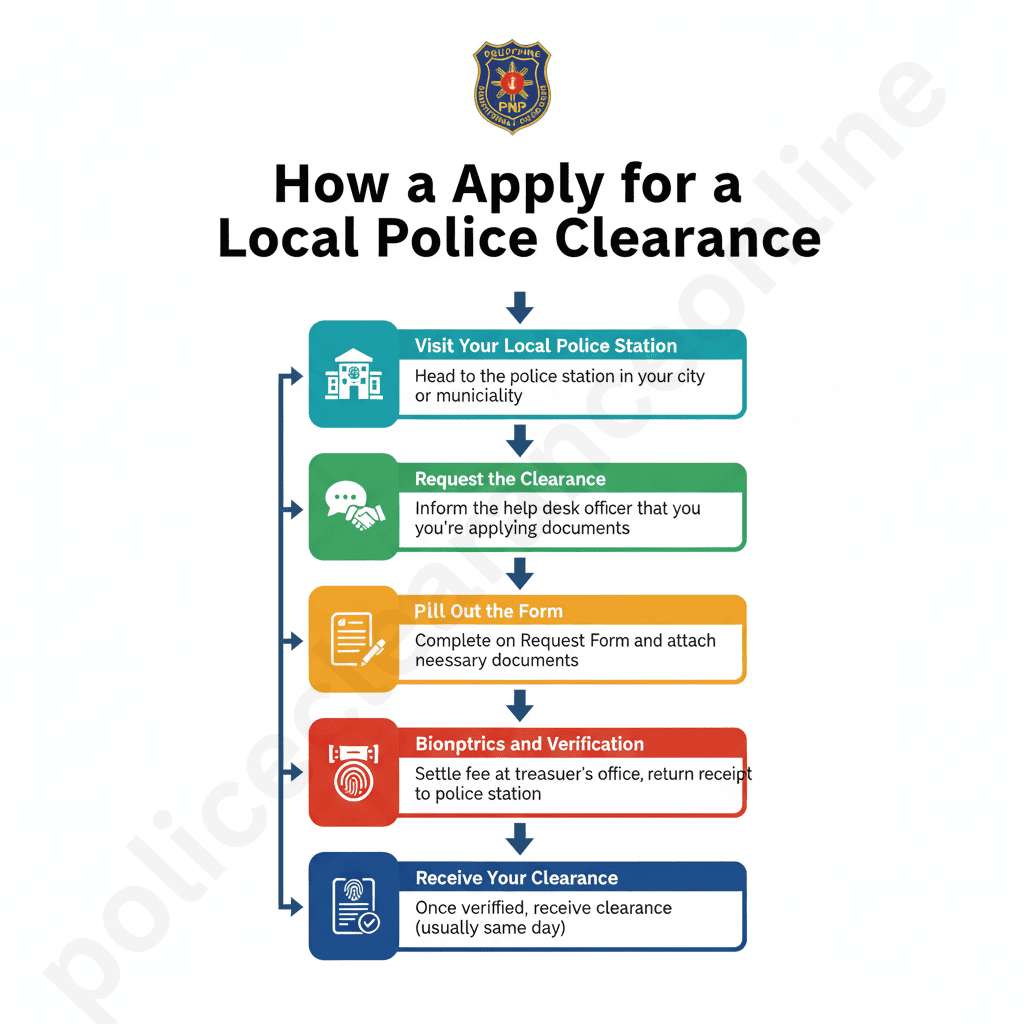
How to Apply for a Local Police Clearance
Applying for a Local Police Clearance is straightforward, especially if you have no pending cases. Follow these steps:
- Visit Your Local Police Station – Go to the police station in your city or municipality where you reside.
- Request the Clearance – Inform the help desk officer that you want to apply for a police clearance.
- Fill Out the Application Form – Complete the police clearance online registration Request Form and attach the required documents.
- Pay the Fee – Settle the clearance fee at the municipal or city treasurer’s office, then return the official receipt to the police station.
- Biometrics and Verification – Provide your fingerprints while the officer checks the database for any criminal records.
- Receive Your Clearance – Once your records are verified, the local police clearance will be issued, usually on the same day.
Comparison between LPC (Local Police Clearance) & NPC (National Police Clearance)
| Features / Comparison | LPC | NPC |
|---|---|---|
| Scope | Only valid in the area of the police station that issued it. | Covers all police stations nationwide across the Philippines |
| Purpose | Used for local purposes, like community matters or jobs in your area. | Used for national or government purposes, such as jobs, travel, or business permits. |
| Validity | 6 Months from the date of issue | 6 Months from the date of issue |
| Mode of Application | Manual Application – Applicants must visit their local police station to apply | Applied online through the national police clearance online (NPCS) website. |
| Issuing Authority | Local Police Station within the applicant’s city or municipality | Philippine National Police (PNP) via the centralized online clearance system |
Police Clearance: Photo and Fingerprinting Process
On your scheduled appointment day, go to the police station you selected during online booking. Make sure to bring:
- Two valid government-issued IDs
- NPCS reference number
- Official payment receipt
Having these ready ensures a smooth and hassle-free clearance process.
Biometrics and Verification
During your appointment, you will go through the standard clearance procedures, which include:
- Fingerprint Scanning: All fingers are digitally recorded for identification.
- Photograph Capture: A fresh photo is taken for your clearance certificate.
- Electronic Signature: Your signature is recorded electronically for official verification.
These steps ensure the accuracy and security of your police clearance.
Receiving Your Police Clearance
- No “HIT”: If your name does not match any records in the police database, your clearance will be issued once your name is called.
- “HIT” Detected: If a name match or discrepancy is found, a Verification Officer will assist you with additional steps. Once the issue is resolved, your police clearance online registration will be released.
Tip: Arrive early and bring all required documents to avoid delays in processing.
The Payment Phase (Avoid Losing Money)
This is often the trickiest step, and many people get anxious here—about 40% of users run into problems because they close the browser before the payment finishes.
Here’s a simple breakdown of the costs:
- Base Fee: ₱150
- Payment Gateway Fee: ₱10–₱30
- Total Cost: Usually between ₱160 and ₱180
Tip: Stay on the payment page until you see the confirmation to avoid errors.

The Payment Gateway:
When it’s time to pay, you’ll be redirected to the Landbank of the Philippines (LBP) portal. Don’t worry—you don’t need a Landbank account. It simply handles the payment securely.
How to Pay for Your Police Clearance Online
Payment for the national police clearance online clearance is quick and convenient using the Land Bank of the Philippines (LBP) ePayment Portal. Cash payments are not accepted—all applicants must complete their payment online through the NPCS website before their scheduled appointment.
Steps to Pay for Your Police Clearance Online
- Once your appointment is scheduled on the NPCS website, follow these steps:
- Click the “Click here to Pay” button.
- You will be redirected to the LBP ePayment Portal.
- Save your payment reference number—this is required for verification at the police station.
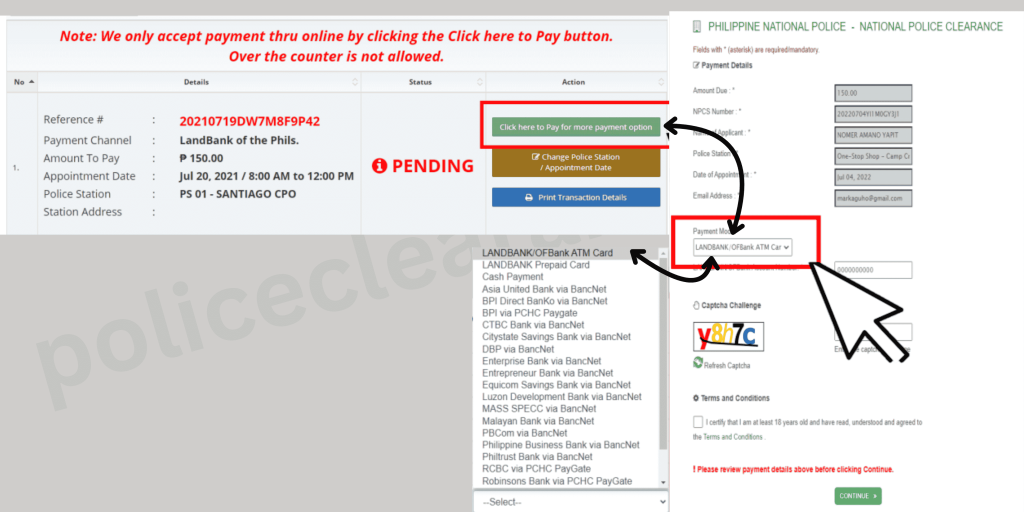
Available Payment Methods
- Landbank ATM Account
- GCash
- BancNet Cards (from participating banks)
How to Pay via Landbank
- Log In to LBP ePayment Portal: Enter your Account Number and PIN.
- Review and Confirm: Check your transaction details and confirm the payment.
- Payment Confirmation: Once successful, a confirmation message will appear — your appointment is now secured.
💡 Tip: Keep a screenshot or printout of your payment confirmation. You may need to show it at the police station as proof of payment.
Benefits of Applying Online
The online pThe online police clearance system offers several advantages for applicants:
- Faster Processing: Your application is handled more quickly, reducing time spent at the station.
- No Long Queues: Avoid waiting in line for hours.
- Real-Time Tracking: Check the status of your application online anytime.
- Convenient Scheduling: Choose your preferred date and time for the appointment.
- Digital Profile for Future Use: Your information is stored, making future applications faster and simpler.
Overall, the online system makes getting a police clearance faster, easier, and more efficient.
How to pay police clearance using GCash?
- On the LBP payment page, select “Cash Payment” or GCash.
- Important: A Payment Reference Number will appear—take a screenshot immediately.
- Open your GCash app and go to Bills Payment > Government.
- Look for “National Police Clearance” or the exact merchant name shown on the LBP page.
- Enter the Reference Number and the exact amount, then complete the payment.
- Go back to your browser and wait for confirmation. The status should change from “Pending” to “Paid.”
Tip: Keep your screenshot handy in case of any payment issues.
Paying via 7-Eleven (ECPay)
- On the payment page, select “Cash Payment” > “7-Eleven.”
- Save your Payment Reference Number.
- Go to a 7-Eleven CLIQQ kiosk.
- Navigate to Bills Payment > Government > National Police Clearance Online.
- Enter your Reference Number and pay at the counter.
What if the Status Stays “Pending”?
Payment Issues: Stay Calm
If your payment shows as pending, do not pay again.
Solution: Keep your proof of payment—either your GCash receipt or 7-Eleven slip—and bring it to the police station. The officer can use the “Verify Payment” tool to manually update your status and clear the pending payment.
Surviving the Station Visit
You have the appointment. Now you need to get inside.
1. The Dress Code (Strictly Enforced)
Police stations are official government facilities, so dressing appropriately is important.
- Allowed: Jeans or trousers, polo shirts or t-shirts with sleeves, and closed shoes.
- Not Allowed: Slippers, shorts, sleeveless shirts, or ripped jeans.
Important: Security may deny entry if you don’t follow the dress code, which can cause you to miss your police clearance appointment.
2. Document Checklist
- Proof of Payment: Either digital or printed official receipt.
- Two Valid IDs: Originals only—no copies.
- Black Pen: Useful for signing forms or filling out details on-site.
3. The Process
Check-in: Show your Payment Reference Number at the counter. Biometrics:
- Photo: A new digital photo will be taken—remove glasses and jewelry.
- Fingerprints: All fingers are scanned digitally.
- Signature: Use the digital signing pad for your signature.
Emergency Help: For urgent matters anywhere in the Philippines, contact the PNP hotline by dialing 911.
Police Clearance Application For Overseas Filipinos
- Register Online: Go to the PNP website and create your account.
- Complete Your Profile: Log in, fill out your personal information, and submit the required documents electronically.
- Schedule Your Application: Choose the option for overseas Filipinos when booking your clearance appointment.
- Upload Documents: Provide scanned copies of a selfie holding a government ID, your passport bio page, immigration stamps, visa, or proof of residency abroad.
- Pay the Fee: Use the online payment methods available.
- Receive Your Clearance: Once your application is processed, you can download your certificate or request delivery.
- Alternative Option: You may also visit the nearest Philippine embassy or consulate and follow their specific procedures.
This system allows Filipinos living abroad to secure a police clearance without traveling back to the Philippines.
NPC Walk-in
Generally, walk-in applications are not allowed for the National Police Clearance, as all appointments must be scheduled online through the Philippine National Police System (NPCS).
Apply For NPCS OnlineSome local police stations may still accept walk-ins for the old Local Police Clearance (LPC), but this depends entirely on the station’s policy. It’s best to contact your local police station beforehand to confirm if walk-in service is available.
Tip: Using the online appointment system is the recommended and more efficient way to secure your clearance, helping you avoid long lines and unnecessary delays.
“Hit” vs. “No Hit”: What to Expect
Once your biometrics are captured, the system immediately checks your records:
Scenario A: “No Hit” (Clear)
- Result: No criminal record matches your name.
- Outcome: Your police clearance certificate is printed and issued to you within minutes.
Scenario B: “With Hit” (Flagged)
Protocol for a Hit:
- Result: The system found a name match in its database.
- Important: This doesn’t always mean it’s you. Common names like “Juan Dela Cruz” may match other individuals with records.
What Happens Next:
- Your clearance is temporarily withheld.
- Status updates to “For Verification.”
- The PNP verification unit reviews the record to confirm if it belongs to you.
- Timeline: Verification usually takes 5 to 15 working days.
Next Steps:
- Wait for the police station to contact you.
- If it’s a namesake, your clearance will be released.
- If there’s uncertainty, you may be asked to submit an Affidavit of Denial to confirm the record is not yours.
This process ensures that police clearances are accurate and only flag legitimate matches.
Verify a Police Clearance Certificate Online in 2026
Verifying a police clearance certificate is essential to confirm that the document is genuine and valid. This process is important whether you are checking your own clearance status or validating a certificate presented by an employee, vendor, or business partner.
Clearance Verification Methods
Use the official NPCS portal and enter the clearance number along with the required details to verify the certificate immediately.
Contact by Phone or Visit the Issuing Station
Call the relevant PNP hotline or the issuing police station.
Provide the clearance number, applicant details, and the purpose of verification.
Alternatively, visit the station in person with the certificate and a valid ID for manual verification.
Online Verification via NPCS Portal
The fastest and most convenient method.
Online Clearance Verification with NCPS — Step-by-Step (2026)
With the NPCS, the PNP provides a streamlined online verification system connected to its central clearance database.
To verify a clearance certificate:
- Visit the official PNP Clearance portal.
- Go to the “Verify Clearance” section.
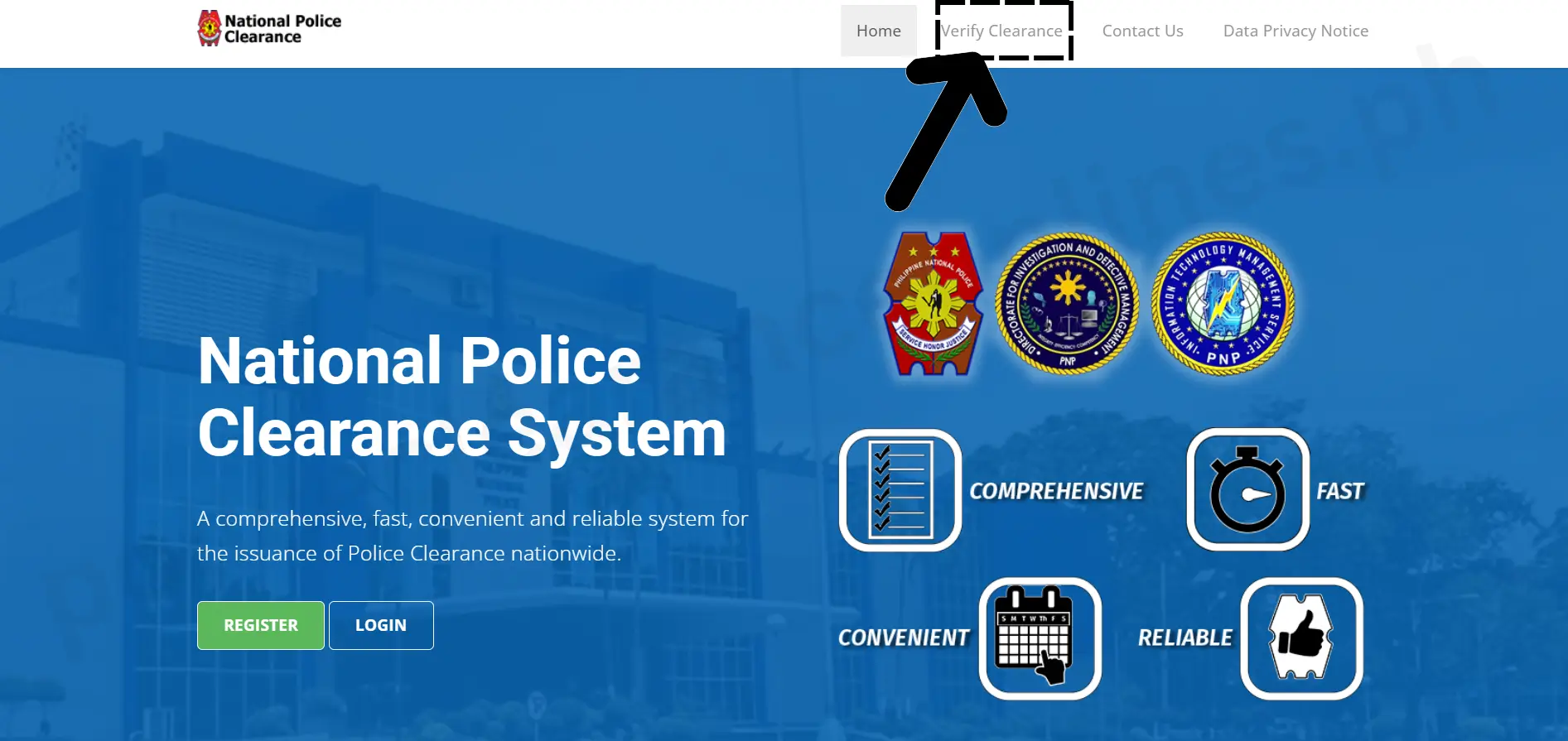
- Enter the applicant’s surname exactly as it appears on the certificate and the unique clearance number.
- Complete the CAPTCHA (e.g., check “I am not a robot”).
- Click “Verify” or “Submit” to see the results.
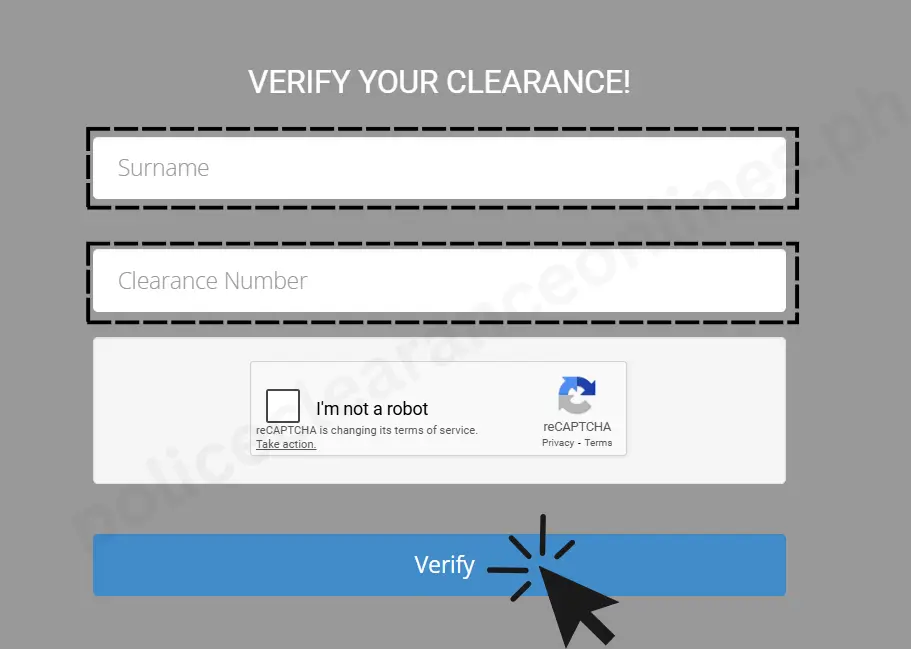
When you verify your police clearance through the NPCS portal, the system will show:
- Clearance Details: Including status (valid or invalid), issuance date, and other relevant information.
- Cost: Verification is completely free, provided as a service by NPCS.
When Should You Verify a Clearance?
A valid police clearance may be required for various situations, such as:
- Job Applications: For local or foreign employment.
- Visa and Immigration: To meet travel or residency requirements.
- Financial Transactions: Bank loans, large purchases, or other financial dealings.
- Business Vetting: Partnerships, vendor, or supplier background checks.
- Licenses and Permits: Including business permits or professional licenses.
Since the clearance confirms a clean criminal record, verifying it helps institutions ensure compliance and reduce legal or reputational risks.
Important Notes & Recommendations
- No Login Needed: Verification does not require logging in—simply enter your clearance number and surname.
- Keep Certificate Info Ready: Ensure the exact spelling of your name and correct clearance number; even minor errors can cause verification failure.
- Share Only What’s Necessary: For employer or third-party checks, provide only your clearance number and surname, not full personal details.
- Use the Official Portal: Always verify through the official PNP/NPCS website to avoid scams or unofficial intermediaries.
Eligibility and Police Clearance Requirements
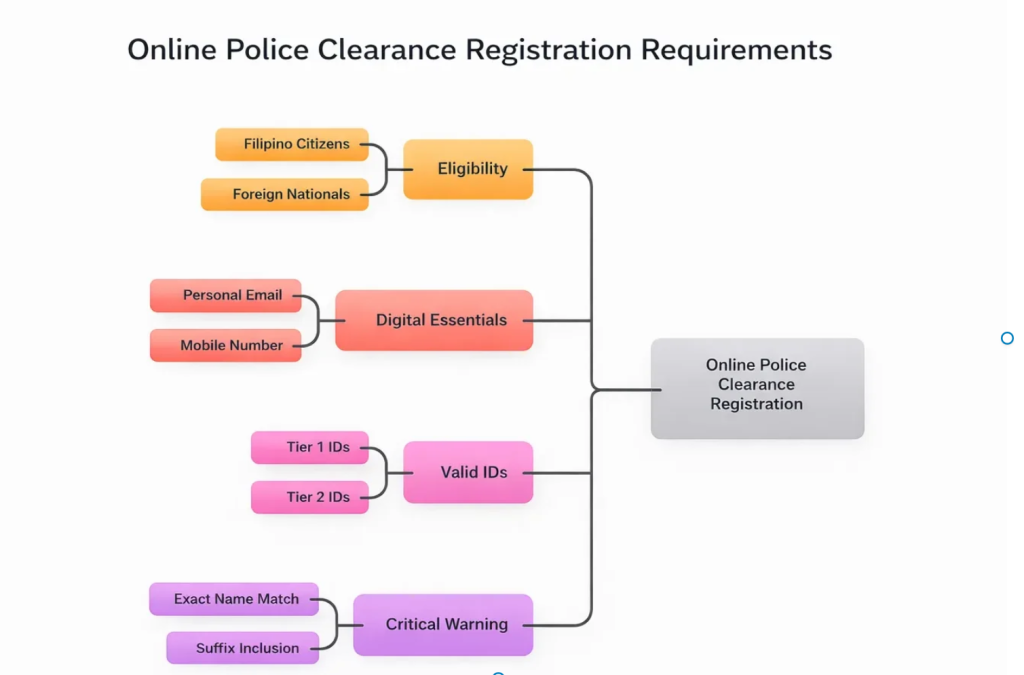
Eligible Applicants:
- Filipino Citizens: Applicants who are Filipino citizens.
- Foreign Nationals who have lived in the Philippines for 6 months or more
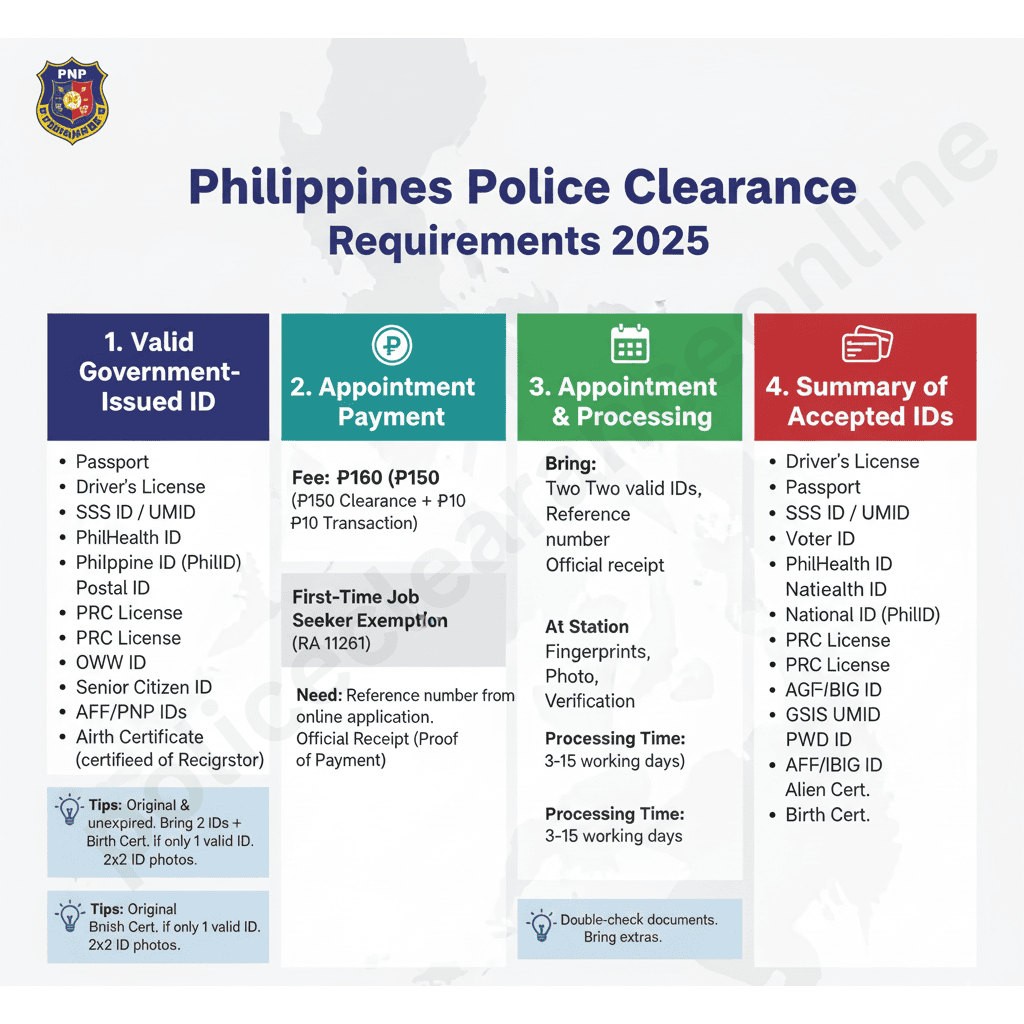
Police Clearance Requirements for a Smooth Online Registration:
The online portal has a short timeout, so having these ready will save you time and prevent errors.
Digital Essentials:
- Personal Email: Use a personal account like Gmail or Yahoo. Avoid work emails to ensure continued access.
- Mobile Number: Needed to receive the One-Time Password (OTP) for verification.
IDs Required:
- Two Original Valid IDs—photocopies are not accepted.
Preferred IDs (Tier 1):
- Passport
- Driver’s License
- UMID
- PhilSys ID (National ID)
- PRC ID
- Voter’s ID
Alternative IDs (Tier 2) if Tier 1 is unavailable:
- TIN ID (Digitized PVC, not paper)
- PhilHealth ID
- Postal ID
- PSA Birth Certificate (as supporting document)
Important: Your registration name must exactly match your ID.
- Example: If your ID says “Ma. Theresa,” do not type “Maria Theresa.”
- Include any suffixes like “Jr.” or “III.”
A mismatch can cause a “Data Error” at the station, potentially requiring a new application and additional payment.
Police Clearance vs. NBI Clearance: Which One Do You Need?
This is the most common mistake applicants make. Applying for the wrong document means burning cash, as government fees are non-refundable.
1. NBI Clearance
Source: Issued through NBI online appointments and in-person visits at NBI centers.
Scope: Covers criminal cases filed in courts, accessed via the Judicial Database.
Best For: Overseas travel or employment, professional licensure exams (PRC), and citizenship/naturalization applications.
3. National Police Clearance (NPC)
Source: Applied through the online PNP portal, followed by a visit to the police station.
Scope: Covers police blotters and arrest records from the PNP database.
Best For: Local employment, gun license applications (LTOPF), ID requirements, and credit card applications.
The Golden Rule:
- Traveling abroad? Get an NBI Clearance.
- Working locally? Get a Police Clearance (PNP).
Pro Tip: Some companies may require both documents for background checks, so check with your HR department.
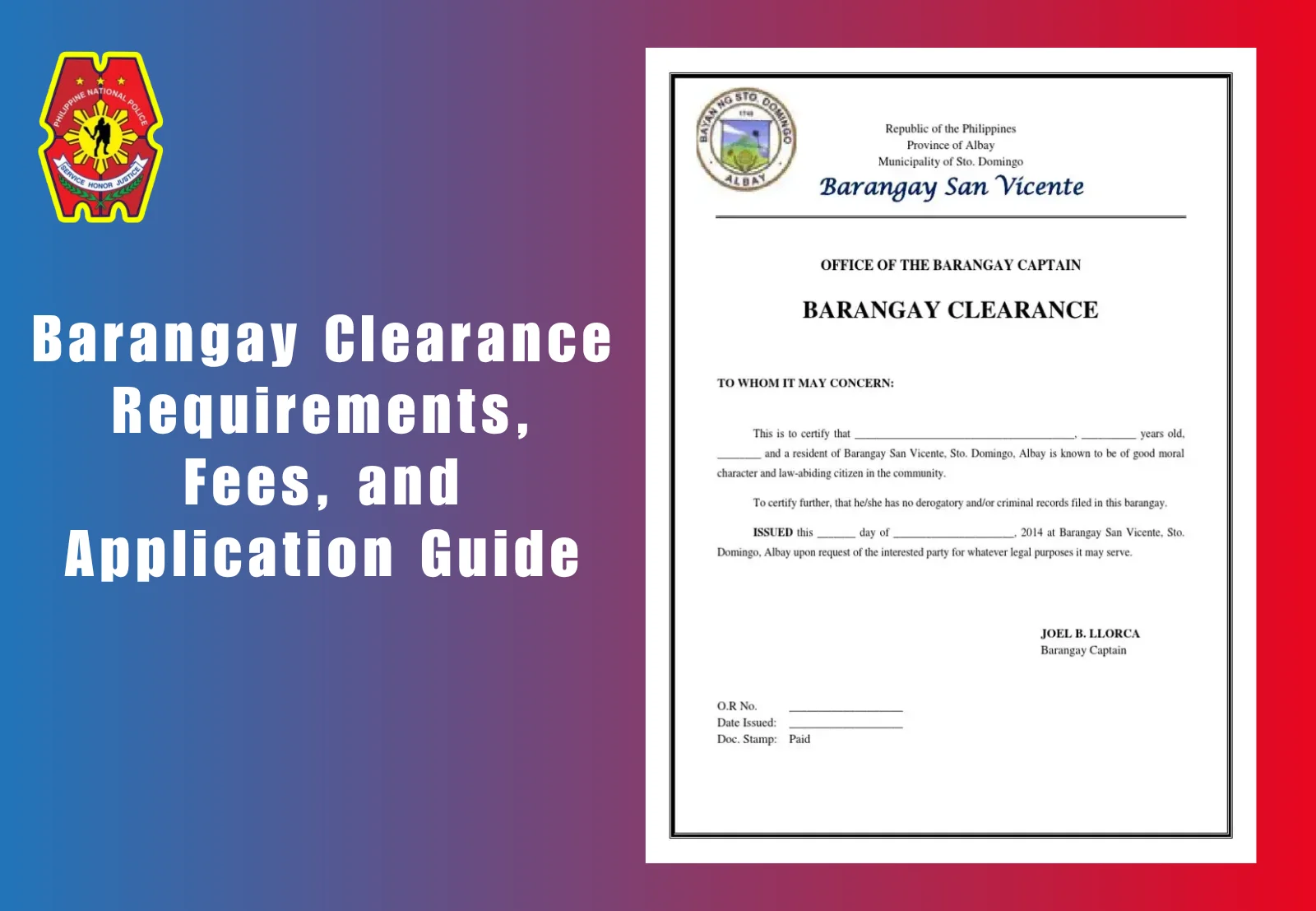
Police Clearance Validity & Verification
Validity and Verification of Police Clearance
- Expiration: The police clearance is valid for six (6) months, not one year.
- Anti-Fraud Verification:
Employers and institutions can verify your clearance using the NPCS Verify tool:- Scan the QR code on the certificate, or
- Enter the unique control number at pnpclearance.ph.
The system will show the official photo and details, confirming authenticity.
Safety Tip: Avoid buying documents from unofficial sources—fake clearances are illegal and easily detected.
Features Of Clearance
A police clearance certificate provides several important functions for citizens:
Proof of Clean Record
A police clearance certificate confirms that you have no criminal record or pending cases in the police database. It serves as official proof of your reliability and trustworthiness, which is often required for employment, travel, or legal matters. This document is essential for visa applications, job processing, or obtaining licenses, helping institutions verify your background and ensure safety and compliance.
Purpose
A police clearance certificate is commonly required for job applications, visa processing, business permits, and other legal matters. It allows employers, embassies, and government offices to verify that an individual has a clean record. By providing this proof, the certificate plays a key role in maintaining safe workplaces and communities, making it an essential document for many official processes.
Biometric Verification
Applicants are required to submit fingerprints and a photo to verify their identity. This biometric step helps prevent fraud and ensures that the clearance is issued to the correct person. The process is quick, secure, and reliable, providing accurate verification for the background check.
Smooth Application Process
Today, most police clearance online application are completed online. Applicants can register, fill out forms, schedule appointments, and pay fees digitally, making the process faster and more convenient. While a few local offices may still allow walk-ins, online booking remains the most efficient and widely used method, helping people avoid long lines and delays.
Quick and Budget Friendly
Obtaining a police clearance certificate is quick and cost-effective. Once your application is approved, the certificate is usually issued within minutes. The process is also budget-friendly, with fees kept at a minimal amount, making it accessible to most applicants.
Validity
A police clearance certificate is typically valid for six months, after which it must be renewed. This ensures that the information remains current and accurate. Governments and employers recognize the certificate as official proof of good conduct, making it a trusted document for various legal and professional purposes.
How to Download a Police Clearance in the Philippines
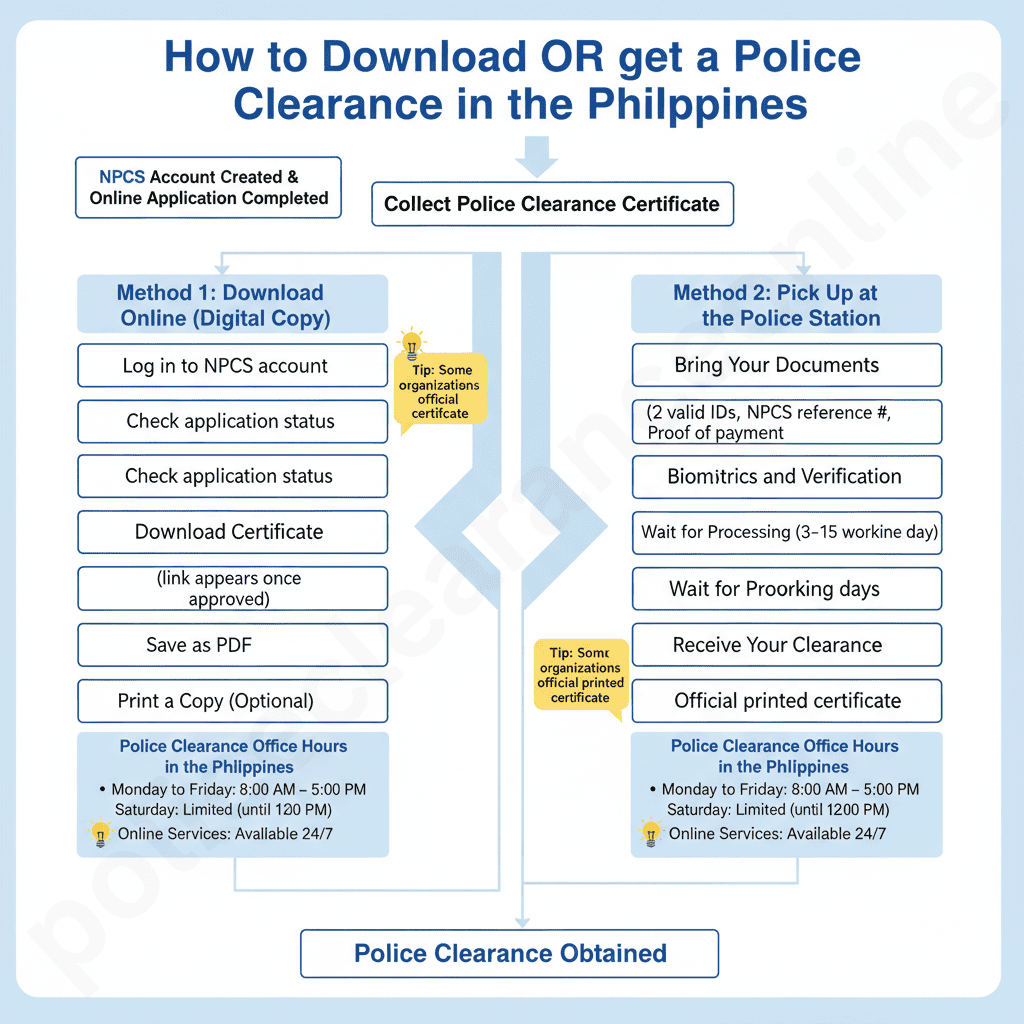
Applying for a police clearance online is simple if you follow these steps:
- Visit the Official Website: Go to the official PNP portal or your local government’s police clearance website.
- Log In or Register: If you already have an account, log in. Otherwise, create a new account.
- Complete the Application: Enter your personal details such as full name, address, and contact number. Some documents may need to be uploaded.
- Pay the Fee: Pay the clearance fee online. Payment options depend on the portal you’re using.
- Wait for Processing: Allow some time for the authorities to review and process your application.
- Download Your Clearance: Once approved, you’ll receive a notification via email or your account. Log in to download your certificate.
- Print a Copy: Keep a printed copy for your records or to present to employers, travel agencies, or other official purposes.
Note: Always follow the specific instructions provided on the portal to ensure a smooth application process.
Police Clearance Office Hours in the Philippines
- Monday to Friday: Open from 8:00 AM to 5:00 PM
- Saturday: Some locations operate, typically until noon
- Online Services: Applications and updates can be accessed anytime, even outside regular office hours, through the official portal.
What is a Police Clearance Data Card?
The Police Clearance Data Card is an official document issued by the Philippine National Police (PNP). It certifies that you have passed a background check and have no criminal record.
The card contains essential information, including:
- Full name
- Date of birth
- Address
- Photograph
- Fingerprints
- Date of issue
This card is commonly required for employment, travel, or legal transactions, serving as proof of your clean record.
Security and Privacy Considerations
The PNP Online Clearance System is safeguarded under Data Privacy Laws. Your personal and biometric information is protected through:
- SSL Encryption: Secures data during transmission.
- Two-Factor Authentication: Adds an extra layer of account protection.
- Secure Database Access: Only authorized personnel can access your records.
Safety Tip: Always use official portals and avoid sharing your credentials or personal information on unverified websites..
When You Need Police Clearance the Most
A police clearance certificate is often required in various situations, including:
- Employment: As part of job hiring requirements and background checks.
- Visa and Immigration: For travel, work, or residency applications abroad.
- Financial Transactions: Loan applications, credit cards, and other banking purposes.
- Government Exams and Contracts: Such as professional licensure or official agreements.
- Civil Registry Updates: For changes in personal records like name or marital status.
- Business Compliance: During company registration or licensing processes.
- Adoption and Guardianship: To verify the applicant’s clean record.
It serves as an official proof of good conduct across legal, professional, and personal matters.
Tips and Warnings for Getting a Police Clearance Online
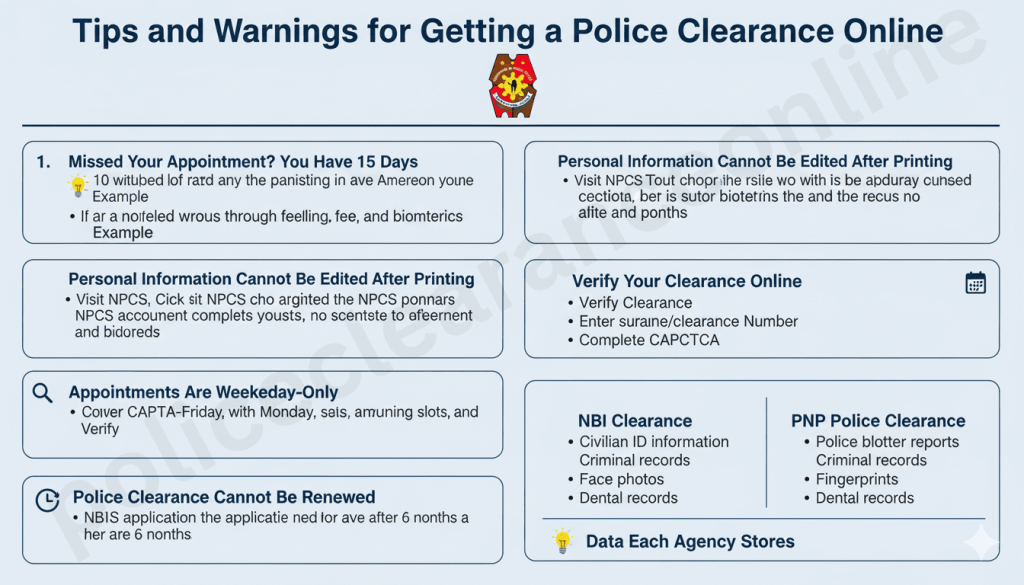
Applying for a National Police Clearance online is easy and convenient. To avoid delays or extra fees, follow key tips and important warnings throughout the process.
1. Missed Your Appointment? You Have 15 Days
Missed Your Appointment? Don’t worry—you have 15 days to complete your police clearance at the selected station. After that, your payment will be forfeited, and you’ll need to reapply and pay again.
💡 Tip: If you need to reschedule, check your NPCS account. Some applicants, like those affected by lockdowns, successfully rescheduled without extra fees.
2. Personal Information Cannot Be Edited After Printing
Important: Once your police clearance is printed, no edits can be made. If there’s a mistake, you’ll need to:
- Complete biometrics at the station once more.
- Submit a new application
- Schedule a new appointment
- Pay the fee again
3. Verify Your Clearance Online
- Go to the NPCS website and select “Verify Clearance.”
- Enter your surname and clearance number.
- Complete the CAPTCHA and click “Verify.”
This confirms your clearance is authentic before submitting it to employers or agencies.
4. Appointments Are Weekday-Only
Appointment Schedule: Police clearance bookings are available Monday to Friday only—weekends are not available. You can choose a morning or afternoon slot, so pick a time that best fits your schedule.
5. Police Clearance Cannot Be Renewed
Note: Police clearance cannot be renewed. Once it expires after 6 months, you must apply again and start the process from the beginning.
6. Data Each Agency Stores
NBI Clearance:
- Civilian ID information (marks, distinguishing features)
- Criminal records
- Face photos
- Fingerprints
- Dental records (from the Philippine Dental Association)
PNP Police Clearance:
- Police blotter reports
- Criminal records
- Face photos
- Fingerprints
💡 Tip: Knowing what information is stored helps you gather the correct documents and ensures your application is processed smoothly.
Data Each Agency Keeps
NBI (National Bureau of Investigation) Stores:
- Civilian identification details (marks, physical features)
- Criminal records filed in courts
- Facial photographs
- Fingerprints
- Dental records (from the Philippine Dental Association)
PNP (Philippine National Police) Stores:
- Police blotter reports
- Criminal records
- Facial photographs
- Fingerprints
This distinction shows that NBI focuses on judicial records, while PNP focuses on police and arrest records.
How to Schedule a Police Clearance Appointment in the Philippines
Scheduling a police clearance appointment in the Philippines is easy and can be done online through the National Police Clearance System (NPCS). The steps are similar whether you’re in Batangas, Cebu, Davao, or other areas.
- Find the Right Police Station
- Check the NPCS website or contact your local police station to ensure they process police clearances.
- Pick a convenient time slot (morning or afternoon) and click “Next” to proceed.
- Prepare Requirements
- Bring two valid IDs, proof of payment (₱150), and your NPCS reference number.
- Schedule Your Appointment
- Log in to your NPCS (national police clearance appointment) account, select your preferred station and date, and confirm your booking.
- Visit the Police Station
- Arrive on your scheduled date for biometrics, verification, and payment if not completed online.
- Claim Your Clearance
- After processing, you can download your clearance online or collect it from the station.
Example: In Batangas, applicants can select Batangas City Police Station when booking through NPCS (national police clearance appointment).
Types of Police Clearance in the Philippines
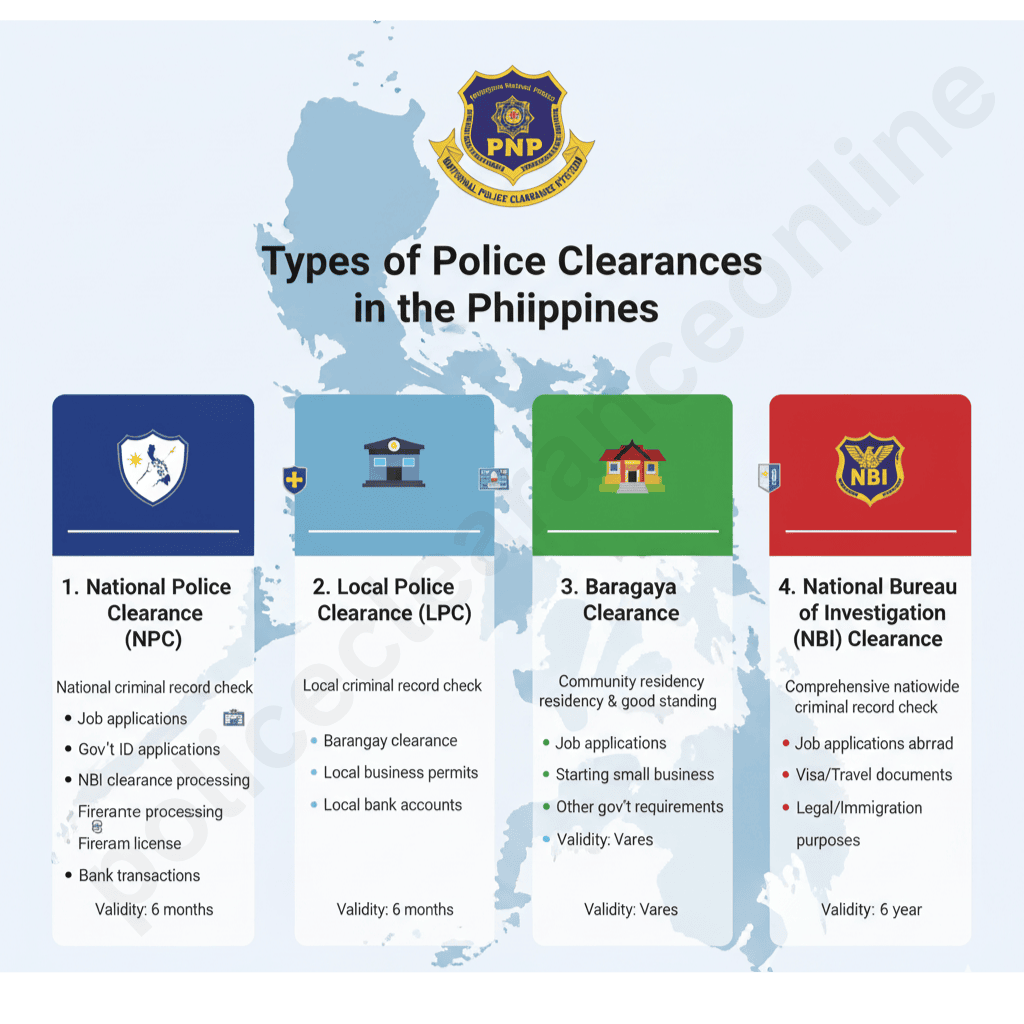
The Philippine National Police (PNP) issues different types of police clearances depending on purpose and coverage. These clearances are used for employment, business, travel, or legal matters. Here are the main types available in the Philippines.
1. National Police Clearance (NPC)
The National Police Clearance verifies that a person has no criminal record nationwide using the PNP’s central database.
Common Uses:
- Job applications (local and abroad)
- Government ID applications
- NBI clearance processing
- Firearm license registration
- Bank or financial transactions
Validity: 6 months from the issue date.
2. Local Police Clearance (LPC)
A Local Police Clearance only covers criminal and derogatory records within a specific local police station’s jurisdiction. It’s typically faster and easier to obThe Local Police Clearance covers only the issuing municipality and is often needed for:
- Barangay clearance applications
- Local business permits
- Opening local bank accounts
Validity: 6 months from the date of issuance.
3. Barangay Clearance
The Barangay Clearance is issued by your barangay office to confirm you are a resident in good standing with no pending issues.
Common Uses:
- Job applications
- Starting a small business
- Fulfilling other government requirements
4. National Bureau of Investigation (NBI) Clearance
The NBI Clearance is a more comprehensive certificate that verifies a person has no criminal record or pending case nationwide. It is recognized for both local anThe NBI Clearance is used for national and international purposes, including travel, immigration, and overseas work.
Common Uses:
- Job applications abroad
- Visa or travel document processing
- Legal and immigration requirements
Validity: 6 months to 1 year, depending on the purpose.
Benefits of Police Clearance Online Apply
The PNP online clearance system offers multiple advantages:
- Faster Processing: Reduce waiting time at the station.
- Avoid Long Queues: Schedule appointments to skip long lines.
- Real-Time Tracking: Monitor your application status online.
- Convenient Scheduling: Pick dates and times that suit you.
- Digital Profile for Future Use: Your data is saved for future applications, eliminating repetitive steps.
💡 Tip: Using the online system not only saves time but also makes the application process smoother, safer, and more efficient.
Why and When You Need a Police Clearance the Most
A National Police Clearance is an official document confirming that a person has no criminal record. It is commonly required by employers, government offices, and legal authorities. Typical situations where a police clearance is needed include:
Job Hiring Requirements
Many companies, locally and internationally, request a police clearance during background checks to verify that applicants have no criminal history and are fit for employment.
Visa and Immigration Documents
Visa and Immigration: Embassies and immigration offices often require a police clearance to confirm your good conduct in the Philippines when applying for work visas, residency, or international travel.
Loan and Financial Transactions
Banks and lending institutions may require a police clearance to verify your background when applying for loans, credit cards, or other financial services, particularly for larger amounts or higher-risk accounts.
Government Exams and Contracts
Individuals applying for civil service exams, government positions, or official contracts may be asked to present a police clearance. It serves as proof of a clean criminal record and is often required for licensing, bidding, or other government-related processes.
Change of Civil Registry Details
When updating personal information in government records—such as name changes, marriage records, or other civil status amendments—a police clearance may be required. It verifies your identity and confirms you have a clean criminal record.
Business Registration Compliance
Entrepreneurs may be required to present a police clearance when applying for business permits or fulfilling regulatory requirements. This ensures that business owners have a clean criminal record.
Adoption and Guardianship Cases
Courts may request a police clearance for adoption, guardianship, or child custody cases. This confirms that the applicant has a clean criminal record and is of good moral standing.
PNP Clearance Contact Information
If you need help or have questions regarding your National Police Clearance application, you can reach out through the following:
Office: PNP National Police Clearance System (NPCS) One-Stop Shop
Address: Camp Crame, Quezon City, Philippines
Telephone: (02) 8723-0401 loc. 7663
FAQs – National Police Clearance Philippines (2026)
A police clearance certifies that you have no criminal record. Here’s how to get one:
Steps:
- Online Registration: Go to the NPCS website and create an account.
- Complete Your Profile: Fill in personal information accurately (must match your ID).
- Upload Documents: Usually two valid IDs and proof of payment.
- Schedule Appointment: Choose your preferred police station and date.
- Visit the Police Station: Complete biometrics (fingerprints, photo, signature) and verification.
- Receive Clearance: If no discrepancies, your clearance is issued on the same day or downloadable online.
- Fee: ₱150 (standard for most locations).
- Payment Methods: Online via LBP ePayment Portal, GCash, or BancNet cards.
- Keep your payment reference number for verification at the station.
- You can obtain a clearance from:
- Local Police Stations: For Local Police Clearance (LPC).
- NPCS Online: For National Police Clearance (NPC), valid nationwide.
- Check the NPCS portal to find stations that process clearances.
NPCS Online Process:
- Register or log in to your NPCS account.
- Fill out the application and upload IDs.
- Schedule your appointment at a participating police station.
- Pay the fee online.
- Print or download your clearance once issued.
Tip: Use Gmail or Yahoo emails to avoid OTP issues.
Similar to #4, but focus on document submission:
- Payment must be completed before the appointment.
- Upload scanned IDs (passport, driver’s license, UMID, etc.).
- Keep your NPCS reference number ready.
- Choose your station and time slot online.
- During the NPCS payment step, select GCash as the payment method.
- Open your GCash app, enter payment details, and confirm.
- Save your payment reference number — required at the police station.
Tip: Payments are fully digital, no cash accepted.
Requirements:
- Two valid government IDs (originals).
- Payment of ₱150 via NPCS-approved digital methods.
- NPCS account for online registration and scheduling.
Procedure: Same nationwide; applicants in Manila, Cebu, Davao, Quezon City, and Batangas follow similar steps.
Step-by-Step Summary:
- Create an NPCS account.
- Fill out your profile and upload supporting documents.
- Schedule a police station appointment.
- Pay the fee online.
- Visit the station for biometrics and verification.
- Download your clearance.
Tip: Ensure your name exactly matches your IDs to avoid errors.
Police clearance cannot be renewed.
Validity: 6 months from issuance.
After expiration, reapply from scratch following the full process.
No, police clearance is not an official government-issued ID.
- It can, however, be used to verify good conduct for: Employment applications
- Travel and visa processing
- Legal and government requirements
Conclusion: National Police Clearance Online Registration and Appointment
Getting a National Police Clearance in the Philippines has become quicker and more convenient thanks to the Philippine National Police (PNP) online system. Whether you need it for job applications, visa processing, or legal matters, the National Police Clearance System (NPCS) simplifies the entire process—from online registration and payment to scheduling your appointment.
By carefully following the steps and ensuring that all your personal information matches your IDs, you can obtain your clearance smoothly and without unnecessary delays. This digital approach not only saves time for applicants but also improves accuracy, security, and efficiency in managing public records nationwide.

Lea Salonga
For the past seven years, I’ve dedicated my research and writing to Police Clearance processes in the Philippines. I specialize in breaking down the steps, requirements, and latest updates into clear, accurate, and user-friendly content, empowering people to navigate these procedures with confidence and ease.
Updated: 05/09/2026