
Getting a Barangay Certificate is one of the most common—and most misunderstood—errands in the Philippines. Thousands of Filipinos visit their barangay hall every week and leave empty-handed because they asked for the wrong document, forgot their Cedula, or had no idea that what they really needed was a Police Clearance, not a Barangay Clearance at all.
This guide clears up every point of confusion. We explain the different types of Barangay Certificates, the exact requirements checklist, fees, step-by-step procedure, and—critically—when a Barangay document is enough versus when you need to go further and get a Police Clearance from the PNP.
1. What Is a Barangay Certificate?
A Barangay Certificate is an official document signed by the Barangay Captain (Punong Barangay) that certifies a specific fact about you—your residence, your financial status, or your conduct within the community.
It is issued by your local barangay hall, and it only carries weight within that barangay’s jurisdiction. This is important: you cannot obtain one from a barangay you do not live under.
“Barangay Certificate” is a catch-all term. The document’s content and purpose change depending on which type you request. Using the wrong terminology at the counter is the single biggest reason for wasted trips.
2. Barangay Certificate vs. Police Clearance: Know the Difference
This is the most common source of confusion, especially for job applicants.
| Document | Issued By | What It Proves | Best Used For |
|---|---|---|---|
| Barangay Clearance | Barangay Hall | No issues within the barangay | Local employment, school admission |
| Barangay Certificate of Residency | Barangay Hall | You live at a specific address | Bank accounts, Postal ID, IDs |
| PNP Police Clearance | Philippine National Police | No criminal record nationwide | Employment, government transactions, travel |
Key Rule: A Barangay Clearance only covers your standing within one barangay. It does not check national databases.
Most private companies and government agencies that require a background check for employment or major transactions require a PNP Police Clearance, not a Barangay Clearance. The two are not interchangeable.
If your employer, bank, or agency says “clearance,” always clarify: do they want a Barangay Clearance or a PNP Police Clearance? Getting the wrong one wastes time and money.
3. The 4 Main Types of Barangay Certificates
Certificate of Residency
Purpose: Confirms your home address. Used For: Opening bank accounts, applying for internet service, Postal ID application, and as alternative proof of billing when you have no utility bills in your name. Sample wording: “This certifies that [Name] is a bonafide resident of Barangay [Name]…”
Certificate of Indigency
Purpose: Confirms you belong to a low-income household. Used For: Medical assistance at Malasakit Centers, Public Attorney’s Office (PAO) legal aid, government scholarships, and hospital financial assistance. Note: Usually requires a brief interview or cross-reference against the DSWD Listahanan. This certificate is typically free of charge.
Certificate of Good Moral Character
Purpose: Confirms no derogatory record within the neighborhood. Used For: School admissions, some local employment applications. Limitation: Only covers conduct within the barangay. Does not replace a Police Clearance for national background checks.
Barangay Business Clearance
Purpose: Confirms a business operates within the barangay without objection. Used For: Applying for or renewing a Mayor’s Permit. This is the mandatory first step before any business can secure a local government business license.
4. Universal Requirements Checklist (Bring These Every Time)
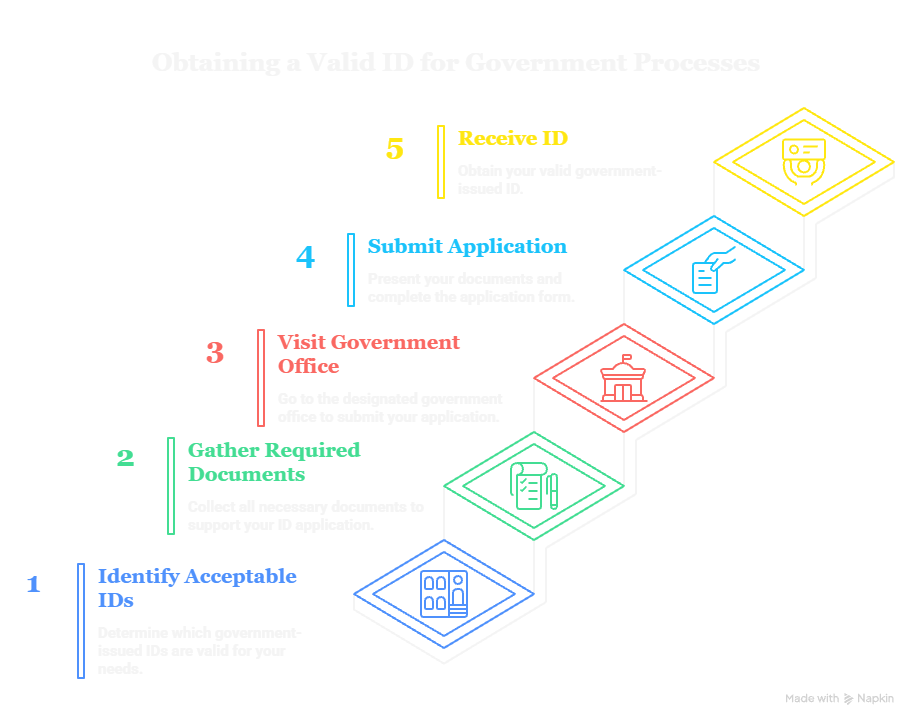
While individual barangays have minor variations in their processes, the following requirements are standard across the Philippines in 2026.
✅ One Valid Government-Issued ID
Any of the following are accepted:
- National ID (PhilSys)
- Voter’s ID
- UMID (SSS or GSIS)
- PhilHealth ID
- Driver’s License
- TIN Card (PVC version)
- Passport
Students may present their School ID paired with any secondary ID.
✅ Community Tax Certificate (Cedula) — The “Hidden” Requirement
This is the requirement that catches most people off-guard. Approximately 90% of barangays will not issue any certificate without a current-year Cedula.
If you do not have one, bring an extra ₱50–₱100. Most barangay halls sell Cedulas on-site.
✅ Proof of Residency (for Newcomers and Renters)
If your Voter’s ID is not yet registered under your current barangay address, you need to establish that you actually live there:
- Lease contract or rental agreement
- Utility bill (even if not in your name, as long as it shows the address)
- HOA (Homeowners Association) endorsement letter
✅ Application Fee
Bring exact cash. The fee is typically ₱50 to ₱100, depending on the barangay. Certificate of Indigency and First-Time Job Seeker applications are free.
5. Step-by-Step: How to Get a Barangay Certificate
Step 1: Go to the Correct Barangay Hall
You must apply at the barangay that covers your residential address. You cannot apply at any other barangay, regardless of convenience.
Step 2: Proceed to the Secretary’s Office
Request the application form at the counter. Fill it out completely.
Critical: Indicate the exact type of certificate you need. Do not write just “certificate.” Write “Certificate of Residency,” “Certificate of Indigency,” or whichever applies. Vague requests cause delays.
Step 3: Submit Your Documents
Hand over your valid ID and Cedula. Renters should also submit their proof of residency.
Step 4: Pay at the Treasurer’s Window
Pay the applicable fee and keep your receipt. Indigency and First-Time Job Seeker certificates are free—do not let anyone charge you for these.
Step 5: Wait for Release (15–30 Minutes)
Processing is usually quick when the Barangay Captain is present to sign. If the Captain is in a meeting or out, you may need to wait longer or return at a specific time. Morning visits (before 10 AM) are strongly recommended.
Step 6: Review Before You Leave
Before signing the release logbook, read the certificate carefully:
- Check the spelling of your full name
- Confirm your address is correct
- Verify the date of issuance
- Ensure the Barangay dry seal (wet seal) is affixed — a certificate without it is invalid
Related: Barangay Clearance for Employment Online Registration & Barangay Clearance for Business in the Philippines
6. Fees and Processing Time
| Certificate Type | Fee | Processing Time |
|---|---|---|
| Certificate of Residency | ₱50 – ₱100 | 15–30 minutes |
| Certificate of Good Moral Character | ₱50 – ₱100 | 15–30 minutes |
| Certificate of Indigency | FREE | 15–45 minutes (may require interview) |
| Barangay Business Clearance | ₱200 – ₱500+ | Varies by LGU |
| First-Time Job Seeker Certificate | FREE | 15–30 minutes |
Note: Fees vary by municipality and city. Some urban barangays charge slightly higher rates.
7. Barangay Certificate Format: What a Valid Certificate Looks Like
Knowing the standard format helps you spot errors on the spot.
Header:
- Republic of the Philippines
- City/Municipality of [Name]
- Barangay [Name]
- Office of the Punong Barangay
Body:
- Salutation: “TO WHOM IT MAY CONCERN:”
- Certification statement identifying you by full name, civil status, and address
- Purpose clause: “This certification is issued upon the request of the interested party for [specific purpose].”
Footer:
- Date of issuance
- Printed name and signature of the Punong Barangay
- Barangay dry seal (round embossed or stamped seal — required for validity)
If the dry seal is missing, the document is not official. Ask them to re-issue or apply the seal before you leave.
8. Validity and Expiry
Standard validity: 6 months from the date of issue.
However, many institutions impose stricter requirements:
- Banks and the DFA (for passport applications) often require the certificate to be less than 3 months old
- Certificates of Indigency are typically valid only for the specific transaction they were issued for
- Employment clearances should ideally be obtained within 30 days of submission to avoid rejection
A Barangay Certificate from 2024 or 2025 is expired and unusable for 2026 transactions. You will need a new one.
9. Special Case: Free Certificates for First-Time Job Seekers
Under Republic Act 11261 (First Time Job Seekers Assistance Act), first-time job seekers are entitled to free government documents to help them enter the workforce.
How it works:
- Visit your barangay hall and request the First-Time Job Seeker Oath of Undertaking
- This certifies you as a first-time job seeker at no cost
- Use this document to claim a free NBI Clearance and free Police Clearance from the PNP
Important warning: This privilege can only be used once in a lifetime. Do not use it for casual document requests. Use it strategically when you are actually applying for your first job.
For details on how to use your free Barangay document to claim your free PNP Police Clearance online, check the full guide at policeclearancepnp.com.
10. When You Need to Go Beyond the Barangay
A Barangay Certificate is enough for many everyday transactions. But for anything involving employment screening, immigration, or major government dealings, you will need more.
Get a PNP Police Clearance when:
- A company’s HR department or a job posting requires a National Police Clearance
- You are processing a government ID (e.g., LTO, NBI, or postal requirements)
- You are applying for a visa or preparing for overseas employment (OFW documentation)
- Your bank requires a clearance for high-value account opening
- You are applying for gun registration or a firearms license
- A court, government agency, or professional regulatory board requires a clean background check
The PNP Police Clearance is processed online through the PNP clearance portal and can be scheduled and paid for digitally — no need to queue at a police station for the initial appointment.
Tip: Many applicants get their Barangay Certificate first and bring it to support their Police Clearance application on the day of their PNP appointment. While not always required, having it on hand covers any secondary verification.
11. Frequently Asked Questions
How much is a Barangay Certificate in 2026?
Between ₱50 and ₱100 for most standard certificates. Indigency and First-Time Job Seeker certificates are free. Business clearances are higher, typically ₱200 to ₱500 depending on the municipality.
Is a Barangay Clearance the same as a Barangay Certificate?
They are related but different. A Clearance focuses on your conduct and moral standing (“no derogatory record”). A Certificate confirms a fact, such as your address or financial status. Both are printed on official barangay letterhead and signed by the Captain, but the wording—and purpose—differs.
Can I get a Barangay Certificate from any barangay?
No. You must go to the barangay where you are a registered resident. You cannot apply at a more convenient barangay.
Can I get a Barangay Certificate online?
Some progressive barangays in Metro Manila and major cities have introduced online request systems or email coordination, but the physical release still requires an in-person visit. As of 2026, no national standard for online issuance exists across all barangays.
Does a Barangay Clearance replace a Police Clearance for employment?
Not for most private-sector employers. A Barangay Clearance only covers your standing within one barangay. A PNP Police Clearance checks national police records and is the standard requirement for employment background checks.
What is the validity of a Barangay Certificate?
Six (6) months from the date of issuance, though some agencies require it to be less than 3 months old.
I am a renter with no utility bill in my name. Can I still get one?
Yes. Present your lease/rental contract as proof of residency. Some barangays also accept an endorsement letter from your landlord or HOA.
Summary: Your 2026 Barangay Certificate Action Plan
- Identify the correct type — Residency, Indigency, Clearance, or Business Clearance
- Bring your Cedula (buy one at the barangay hall if needed, ~₱50)
- Bring a valid ID and proof of residency if you are a renter
- Go in the morning — the Captain is more likely to be present
- Check the document for errors and confirm the dry seal before signing the logbook
- If your institution needs a national background check, a Barangay Clearance is not enough — you need a PNP Police Clearance